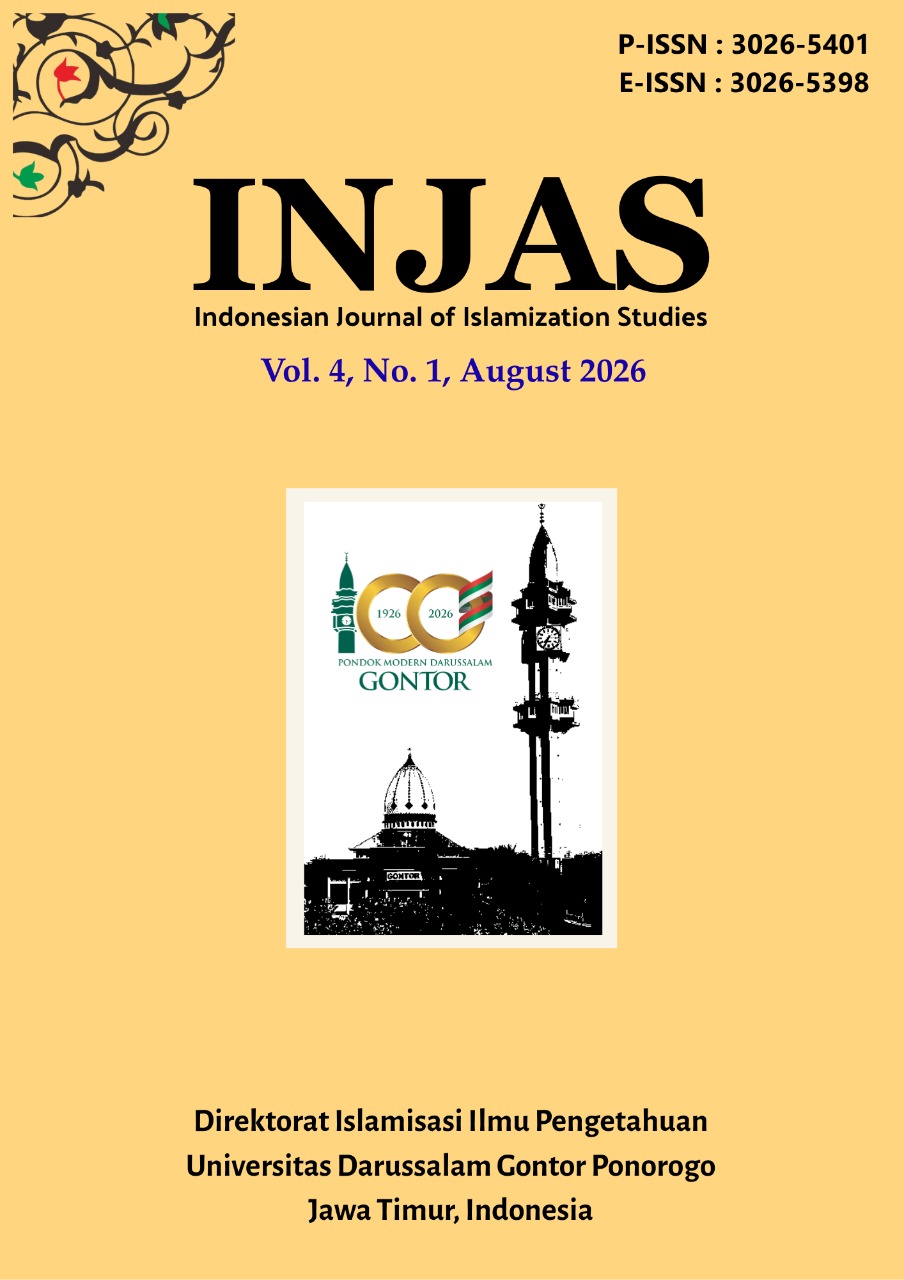
‘Islamic’ Preventive Medicine in the Noble Qur’an
DOI:
https://doi.org/10.21111/injas.v4i1.71Keywords:
Preventive Medicine, Qur'anic Hygiene, Islam and Public Health, Islamic Medicine, Balanced NutritionAbstract
Preventive medicine (hıfzıssıhha) forms a fundamental pillar of Islamic jurisprudence and medical ethics, prioritizing disease prevention over treatment. This study examines the holistic framework of preventive medicine presented in the Noble Qur’an and Sunnah, demonstrating how foundational Islamic principles predate modern hygiene and epidemiological standards by fourteen centuries. Through a qualitative analysis of textual evidence and classical commentary, the research categorizes Islamic preventive healthcare into four primary domains: the mitigation of contagious diseases through early quarantine protocols and strict moral boundaries; abstention from harmful substances; systemic bodily and environmental purification (taharah); and the maintenance of physical health via balanced nutrition. The findings reveal that Islamic health directives maintain a dual emphasis on physical and spiritual purity, establishing balance (i'tidal) between material and spiritual well-being while condemning both dietary excess (israf) and arbitrary deprivation. By instituting preventive guidelines—such as mandatory ablution, quarantine during epidemics, and the prioritization of protein-rich and wholesome (tayyib) foods—Islam establishes an enduring framework aimed at eradicating the root causes of illness. Ultimately, this research demonstrates that the health paradigms legislated in the Qur’an offer a comprehensive, timeless model for individual hygiene and public health preservation, aligning directly with the ultimate objectives of contemporary preventive medicine.
Downloads
Submitted
Accepted
Published
Issue
Section
License
Copyright (c) 2026 Davut Aydüz (Author)

This work is licensed under a Creative Commons Attribution 4.0 International License.
All articles published in INJAS are licensed under the Creative Commons Attribution 4.0 International License (CC BY 4.0).